01 — The problem
Visitors arrived ready to pay and left without entering.
The Nairobi National Museum holds one of Africa's most significant palaeontological collections, including hominid fossils that are critical to understanding human evolution. It receives both domestic and international visitors year-round.
"It is extremely difficult to buy a ticket as a foreigner. They force you to register a national account online."
— TripAdvisor review, Oct 2024
For most of 2024, tourists who tried to buy a ticket online were turned away. Not by a bad button or confusing layout. By a government payment gateway that required a Kenyan eCitizen identity account to process any transaction. An international visitor cannot create one in an afternoon. They just leave.
02 — The diagnosis
This isn't a UX problem. It's a policy dependency.
Redesigning button colours or cleaning up the visual hierarchy changes nothing. The eCitizen requirement sits upstream of the interface. The only design intervention that matters is removing that dependency and replacing it with a flow any visitor can complete on their phone.
Original flow
Redesigned flow
03 — Decisions
What I changed and why.
Guest checkout, no account
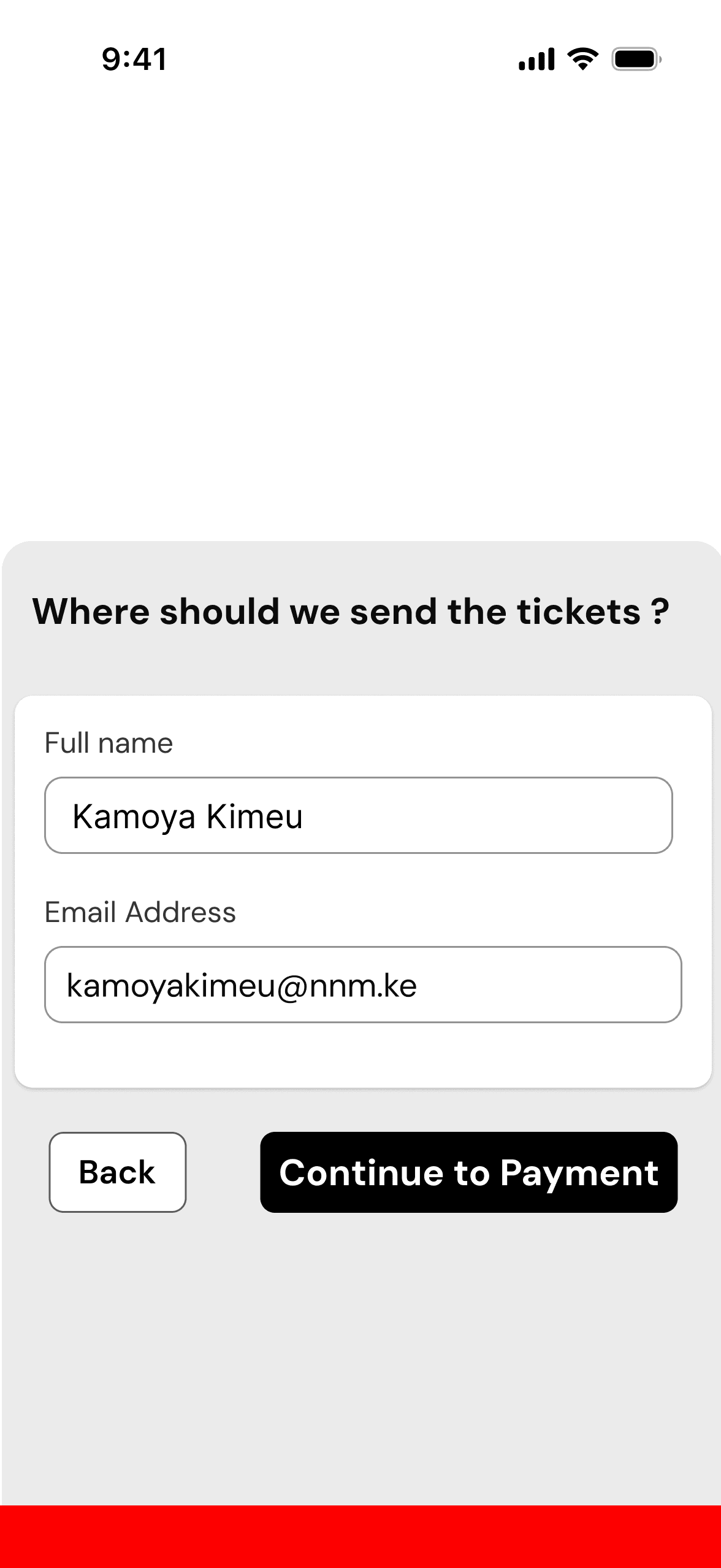
The account wall was the entire problem. I removed it. A visitor picks tickets, enters an email, pays, and gets a QR code. This is exactly how Booking.com handles international guests — no local profile needed.
Show pricing before asking for anything
Resident and non-resident rates are different — that's fine, most museums do this. But the original flow buried the pricing. I moved it to the first screen: you see what you'll pay before you type a single character.
Designed at 390px first
Every review described the same scene: someone standing outside the museum on their phone, on 3G, trying to buy a ticket. That's the device context that matters. I designed at mobile width from the first screen and scaled up.
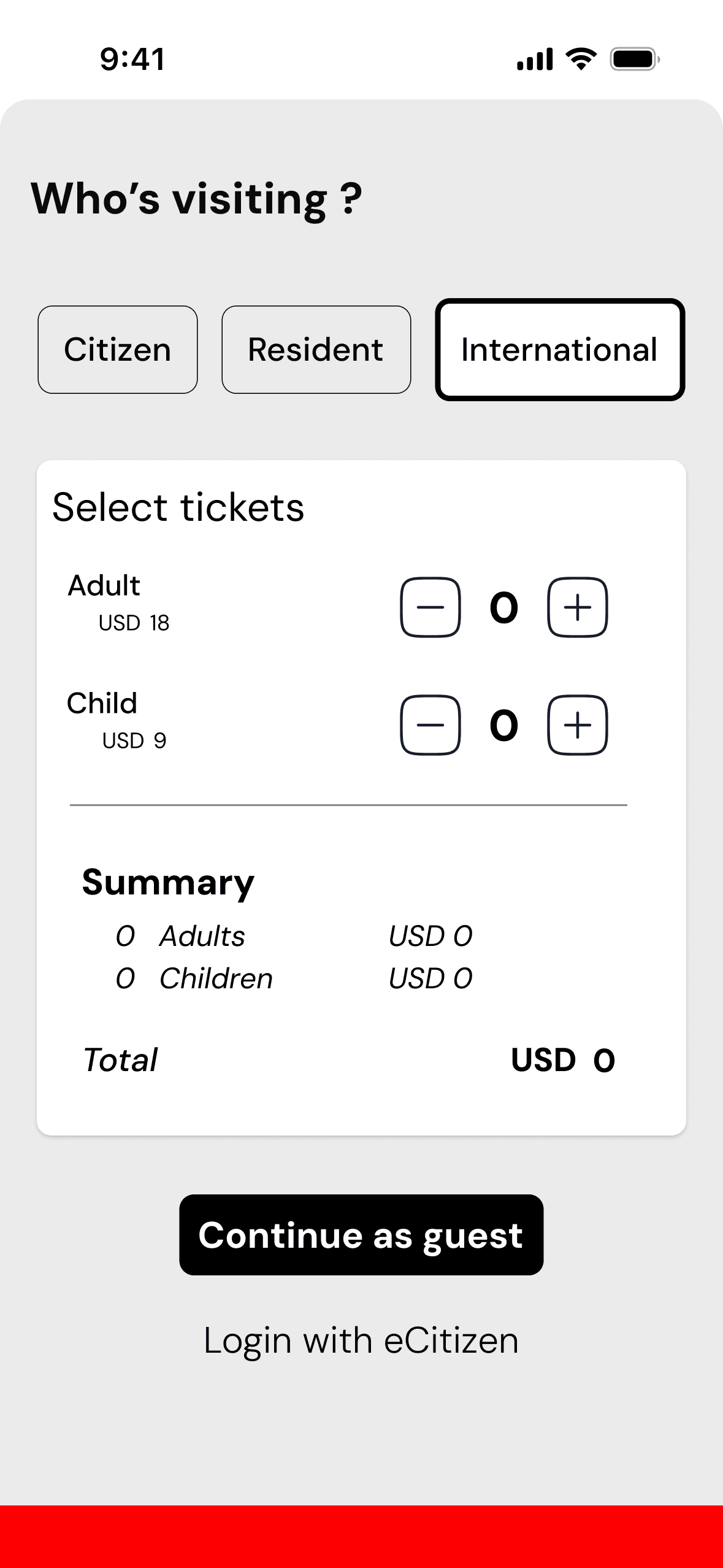
Pricing is visible before any personal information is requested. The visitor type segmentation (Citizen / Resident / International) determines the rate immediately.
04 — The complete flow
Landing to QR code in under two minutes.
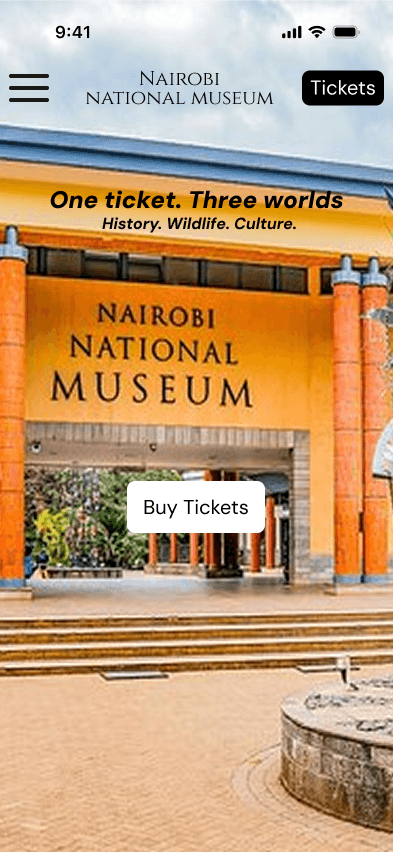
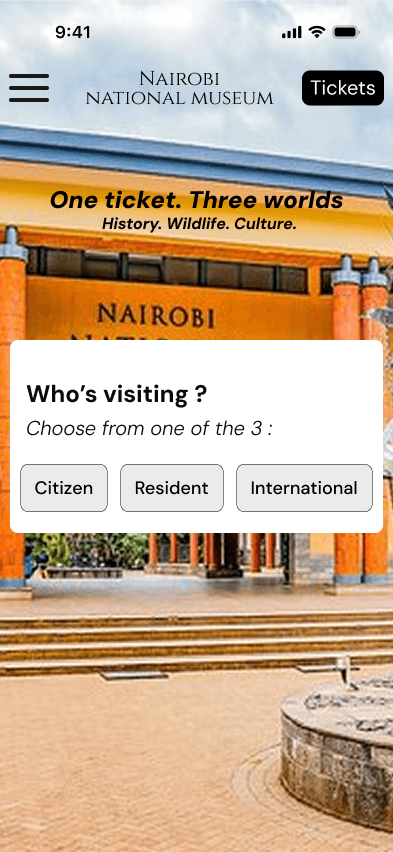
The redesigned flow takes a visitor from the museum landing page to a scannable QR ticket in 3 steps. The entire journey is designed for a 390px screen on a 3G connection — the actual device context described in dozens of TripAdvisor reviews.
Landing
Visitor type
Select tickets
Guest info
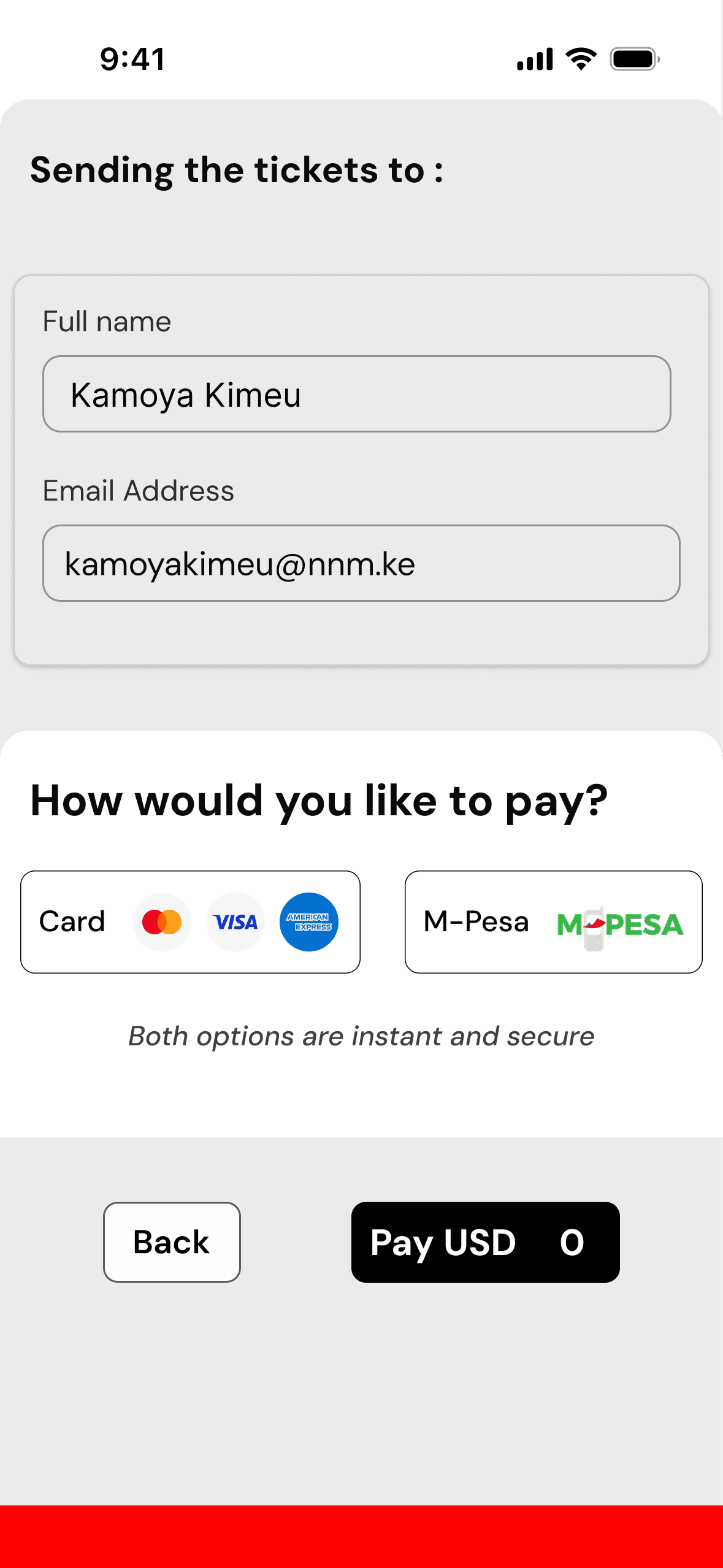
Payment method
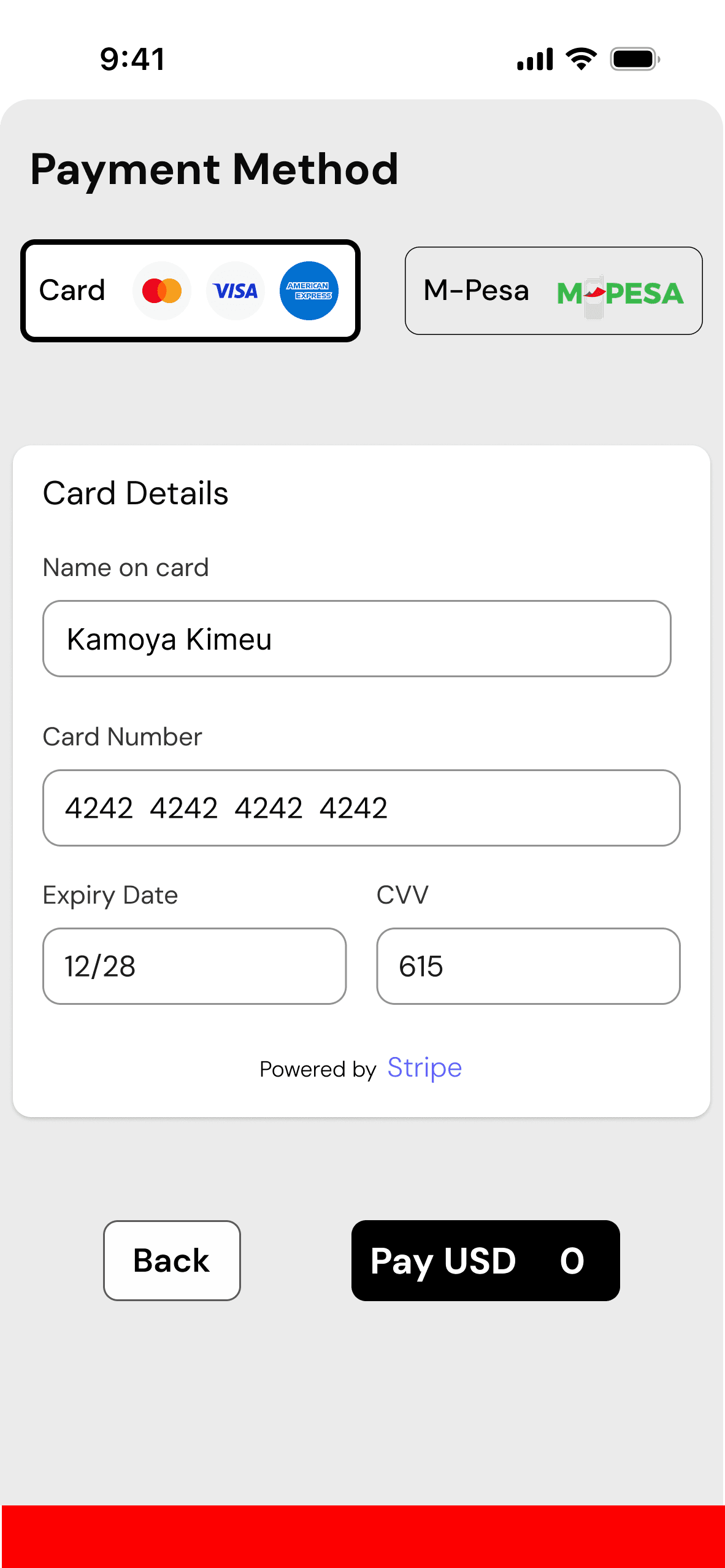
Card details
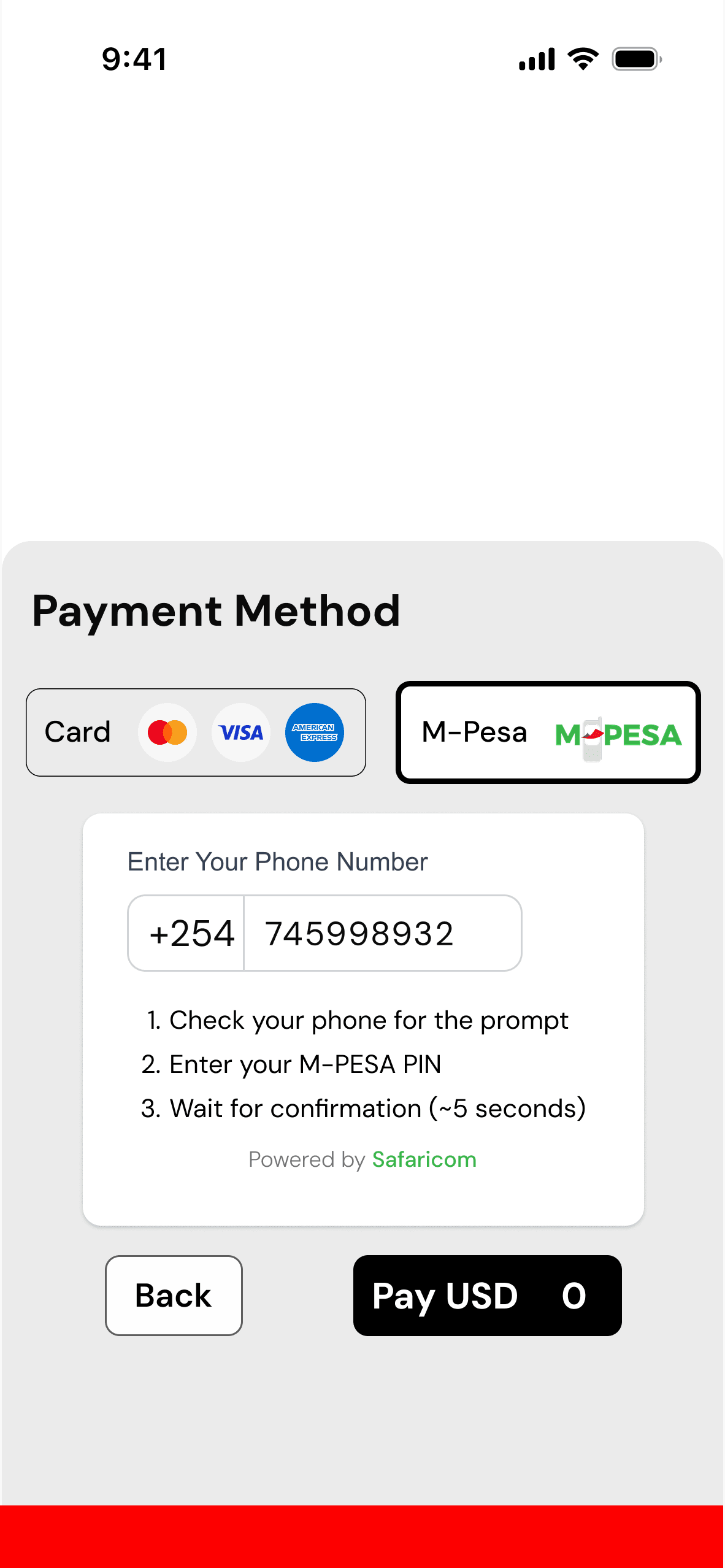
M-Pesa option
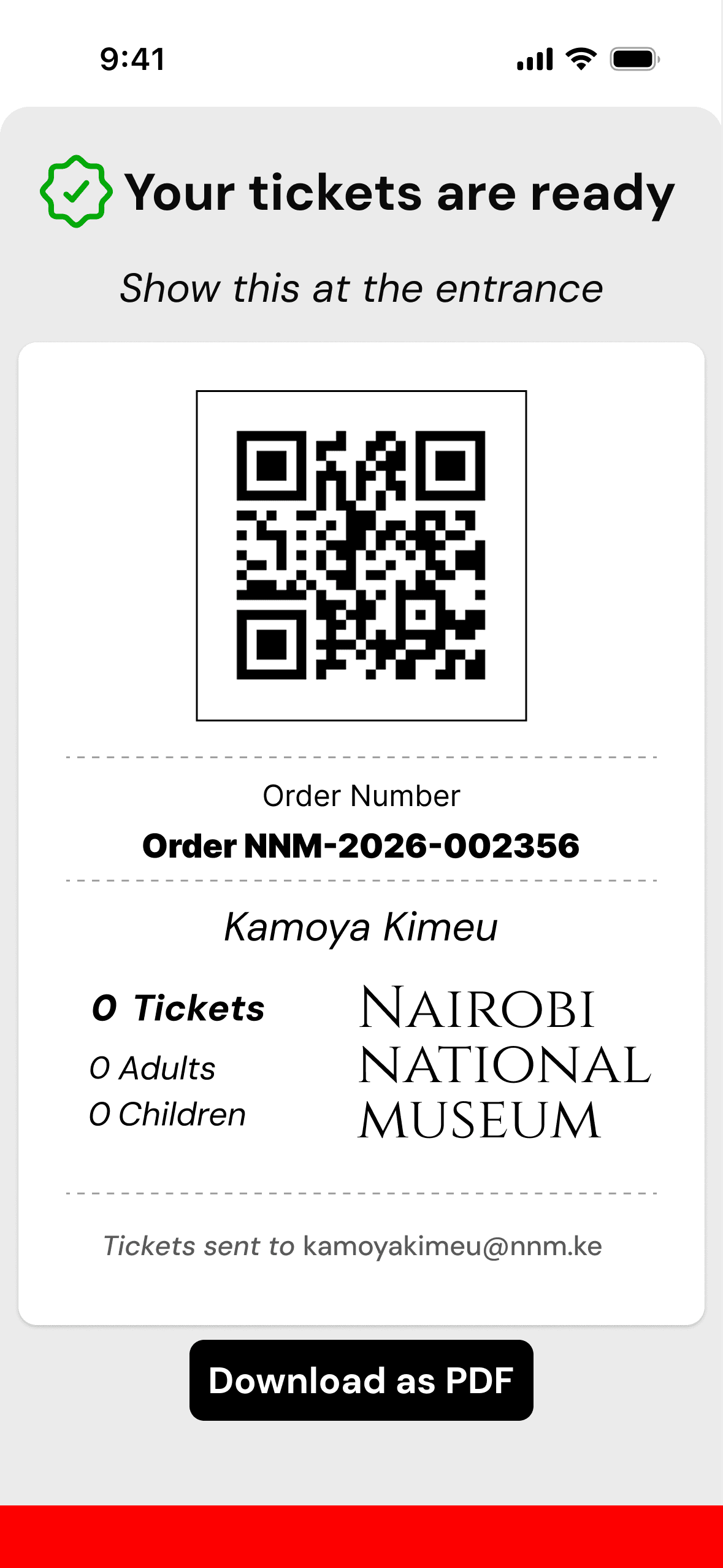
Confirmation
05 — Visual language
The identity needs to earn the collection.
A tourist clicking a link in their Nairobi hotel room has about five seconds to decide if this place is worth their afternoon. The original site gave them nothing to work with — unstyled government components with no visual identity. I used Josefin Sans for a clean, modern display feel paired with a deep institutional red (#8B1A1A) to signal what the museum actually is: a place that holds some of the most significant fossils and artefacts on the continent.
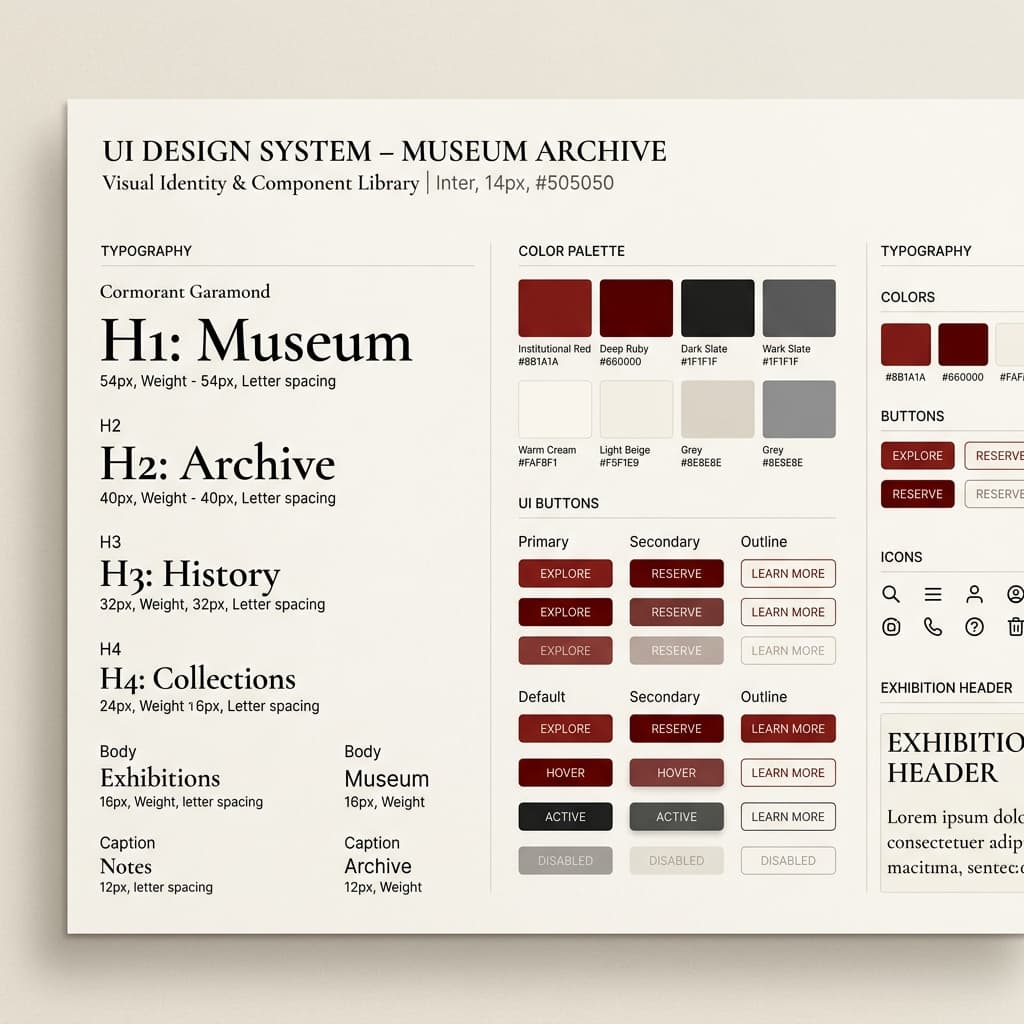
UI design system — Josefin Sans headings, institutional red palette, and component states.
06 — Outcome
What this analysis produced.
This is an unsolicited redesign — I didn't have access to the museum's internal data or engineering team. The value of this project lies in the analytical methodology, not a shipped product.
Research & design outputs
Analysed 18 months of TripAdvisor reviews to identify a consistent structural failure pattern — the eCitizen dependency blocking international ticket purchases
Distinguished between surface-level UX issues and the upstream policy dependency that caused them — reframing the problem from "bad UI" to "broken architecture"
Designed a complete guest checkout flow reducing the purchase path from 7+ steps (with a hard blocker at step 4) to 3 steps with no account requirement
Built a visual identity system (Josefin Sans, institutional red) that positions the museum as a cultural institution rather than a government service
Included dual payment rails — international card payments (via Stripe) and M-Pesa for domestic visitors — matching how people actually pay in Kenya
Accessibility
All interactive elements meet WCAG 2.1 AA contrast requirements against both the white card surfaces and the light grey page background. Button hit areas are minimum 44×44px — critical for a flow designed to be used on a phone in direct sunlight outside a museum entrance. The entire ticket purchase flow is navigable by keyboard, and form inputs use explicit labels for screen reader compatibility.
Reflection
What I'd take forward.
This project taught me that the most impactful design decisions often happen before any screen is drawn. Identifying the eCitizen dependency as the root cause — rather than treating the symptoms with better buttons or clearer copy — changed what "redesign" meant entirely. It wasn't about making the existing flow prettier. It was about removing the thing that made the flow impossible.
If I were to continue this work, the next step would be user testing with actual tourists at the museum entrance — observing the real device context, the real connection quality, and the real decision-making process. The TripAdvisor reviews gave me a starting point, but they're a proxy for observation, not a replacement for it.